Water damage can spread beyond what you can see. Drywall can wick moisture upward, carpet pad can hold water underneath the surface, and wood and other building materials can absorb moisture. Removing standing water and beginning proper structural drying as quickly as conditions allow can help limit additional damage.
SCARF Restoration responds 24/7 from Spring Hill. For emergency water damage, we typically arrive within 60–90 minutes in our primary service area of Hernando and Pasco counties around Spring Hill, with arrival times varying based on location, traffic, time of day and crew availability. Outside Hernando and Pasco counties, we give you an estimated arrival time when you call. Owner Craig Corbett is IICRC WRT-certified (Water Damage Restoration Technician). Our water-damage work is guided by IICRC S500 principles and industry best practices.
Water or fire damage? We answer 24/7.
Call (352) 678-7470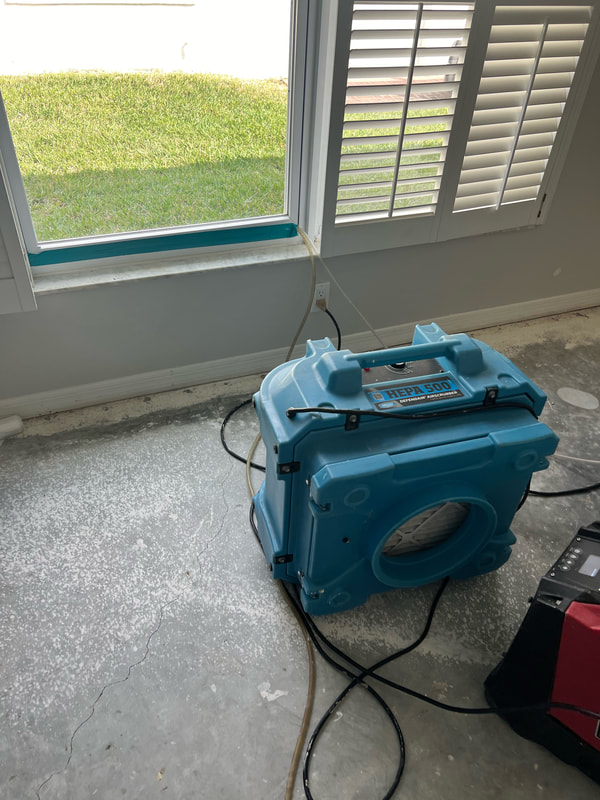
What we do
- Emergency water extraction: removing standing water from floors, carpet and pad with truck-mounted and portable extraction equipment.
- Structural drying: commercial dehumidifiers and air movers, placed by moisture readings, monitored throughout the drying process and adjusted based on moisture readings and conditions.
- Removing what cannot be saved: wet carpet pad, saturated insulation, and the bottom of drywall when a wall cannot dry any other way.
- Cleaning and sanitizing after gray or contaminated water.
- Documentation: photos, moisture maps and drying logs for you and your insurance company.
We use pin and pinless moisture meters to check affected materials and hygrometers to track conditions during drying. Thermal imaging can help us locate areas that may need closer moisture inspection, but moisture meters are used to confirm what is wet. Depending on the loss, extraction and drying equipment may include truck-mounted or portable extractors, weighted carpet extraction tools, submersible pumps, commercial dehumidifiers and air movers.
Common causes we see
- Burst or leaking supply lines, and failed water heaters
- Washing machine, dishwasher and refrigerator ice-maker leaks
- AC condensate drain lines that clog and overflow, a constant in Florida
- Toilet overflows and sewage backups
- Roof leaks and storm water coming in around doors and windows
Whatever the cause, the leak itself is repaired by the right trade: a licensed plumber for pipes and water heaters, a licensed roofer for the roof, and an AC contractor for the system. We dry and clean, and we coordinate timing so drying starts as soon as the source is stopped.
Ceiling and roof leak water damage
Water from a roof or attic leak often soaks insulation and the ceiling drywall before you see a stain. We check the attic side and the ceiling with moisture meters and thermal imaging, remove wet insulation where needed, and dry the ceiling and walls below. The roof itself is repaired by a licensed roofer.
Clean water, gray water and black water
The IICRC classifies water by its level of contamination, and the category guides how we work:
- Category 1 (clean): water from a clean source, such as a broken supply line or faucet. Some materials may be dried in place when conditions and the characteristics of the materials allow.
- Category 2 (gray): washing machine or dishwasher discharge, or an AC overflow. Needs cleaning and sanitizing; some materials must be removed.
- Category 3 (black): sewage, toilet overflows with waste, and outside flood water. These losses require contaminated-water procedures and safety precautions. Affected porous materials that cannot be safely cleaned and restored are removed as appropriate to the loss and the applicable restoration procedures.
The category depends on the source of the water and the conditions of the loss, and it is not fixed: contamination conditions can change or worsen over time, for example as water sits, picks up contaminants from the materials it contacts, or spreads through the building. We assess the source and the conditions on site to decide the appropriate category and procedures, which is one more reason to call early.
What to do while you wait for us
- Shut off the water at the main valve or the appliance supply.
- Turn off power to wet areas if you can do it safely. Never walk through standing water near outlets or cords.
- Take photos and video before anything is moved.
- Move furniture, rugs and valuables out of the water. Put foil or wood blocks under furniture legs.
- Do not use a regular household vacuum on water, and do not turn on ceiling fixtures in a wet ceiling.
After the drying
Once everything is dry and documented, some homes need repairs such as new drywall, baseboards, cabinets or flooring. Repair and reconstruction work that requires a contractor license is performed by an appropriately licensed contractor of your choosing; we coordinate drying and documentation with whoever you hire.
Wet materials that are not dried properly are where mold starts. See preventing mold after water damage.
Insurance
Insurance coverage for water damage depends on the cause of the loss and the terms of your policy. We document the restoration work with photos, moisture readings and job records, and we can communicate with your insurance adjuster about the work we perform. Coverage and claim decisions remain with your insurance company.
Service area
Based in Spring Hill, we're closest to customers throughout Hernando and Pasco counties, which make up our primary service area. For larger restoration losses, we also serve communities throughout Citrus, Hillsborough, Pinellas and Sumter counties, generally within about a 90-minute drive of Spring Hill. Actual travel time depends on your location and traffic.